
―― What we needed to fix first wasn’t the system, but ourselves.
At SCW, we’ve continuously worked on improving operations and optimizing processes.
Streamlining project management, enhancing information sharing efficiency, revising development workflows.
Yet, a nagging feeling lingered.
Despite these improvements, the team’s fatigue wouldn’t lift. In fact, they seemed increasingly overwhelmed.
Regular duties were already demanding, and concurrently exploring internal DX initiatives seemed to be adding to the burden.
Is this it!? Is this what they call DX fatigue!?
Regardless of the exact definition, if employees aren’t physically and mentally healthy, they simply can’t do good work.
I suspect this challenge—balancing the demands of daily work with maintaining physical and mental health—is something companies across industries grapple with daily, alongside concepts like Work-Life Balance and Well-being.
Let’s aim for personalized health improvement – Health DX –
Compared to the past, the working conditions for IT engineers have undoubtedly improved.
Remote work and flexible schedules have become commonplace.
Even so,
we remain inseparable from irregular hours, tight deadlines, unexpected issues, and mental pressure.
I’ve come to see this not as a lack of individual effort, but as a structural challenge inherent to the profession itself.
This is where I shifted my perspective.
Until now, DX has focused on tasks, systems, and processes.
But it’s people who use and sustain these systems.
“If people aren’t in optimal condition, no system can function effectively long-term.”
This realization led us to conclude:
Shouldn’t our own health and well-being also be treated as a target for DX?
We named this initiative:
Health DX.
Let’s get crafty and design our own tools
Of course, countless health management tools exist in the world.
High-functionality apps and specialized services abound.
But our goal this time wasn’t to adopt any of those.
We prioritized things we could understand ourselves
Things we could adjust to fit our work styles
Things we could nurture and improve over time
Above all, we valued being able to start immediately.
Perfect design can wait.
First, speed is key—let’s get it moving.
Naturally, today’s era of generative AI makes it seem like anything is possible.
This time too, we want to leverage current generative AI to devise a sustainable method with minimal burden.
Initial Goal: Start daily logging.
You often hear things like, “Once you start weighing yourself every day, you lose weight.”
I believe that by keeping records, your awareness shifts, leading to conscious and unconscious improvements.
Also, since I want to have generative AI analyze this data, I’d like to leave some diary-like notes of my observations.
The items to log are flexible, but I’ve decided to set up something simple like this:
- Weight
- Body Fat Percentage
- Steps Taken
- Sleep Duration
- Brief Health Notes
I want to start by recording these daily.
Honestly, any tool will do. I can get the numbers by combining a wristwatch-type device with a body composition scale, so I could just use those. Alternatively, I could simply record them in a table like the one below.
First Tool: Google Spreadsheet
Simply create a table in Google Spreadsheet and start logging entries. Since you can use not only PCs but also smartphones and tablets for logging, the emphasis is on being able to update from anywhere. The procedure is relatively straightforward, involving just creating a file.
Create a spreadsheet in any location on Google Drive.
Example: /scw/DailyLogger/dailylog
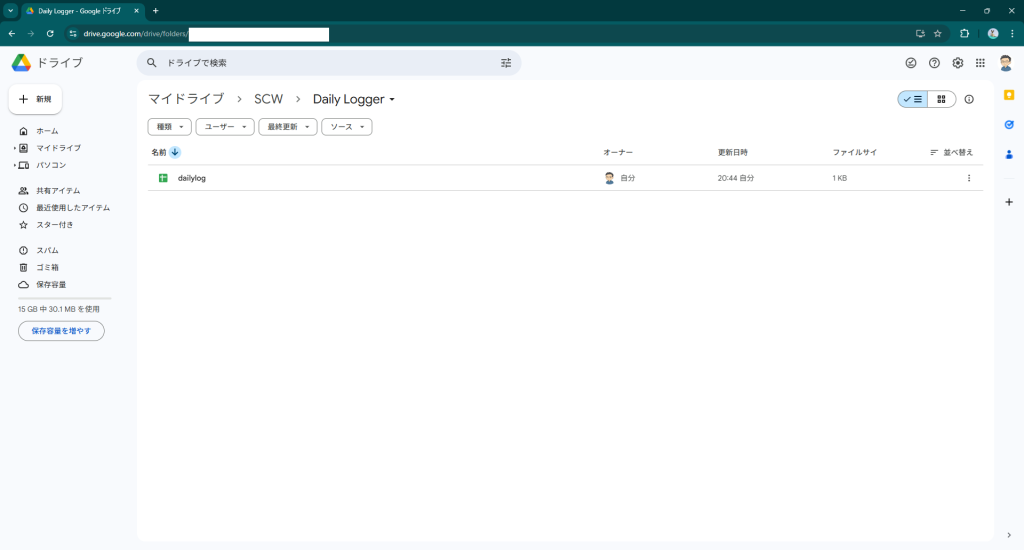
Create five columns in the spreadsheet (anything except date is fine for this example)
Date, Weight (kg), Body Fat Percentage (%), Sleep Duration (h), Steps, Notes
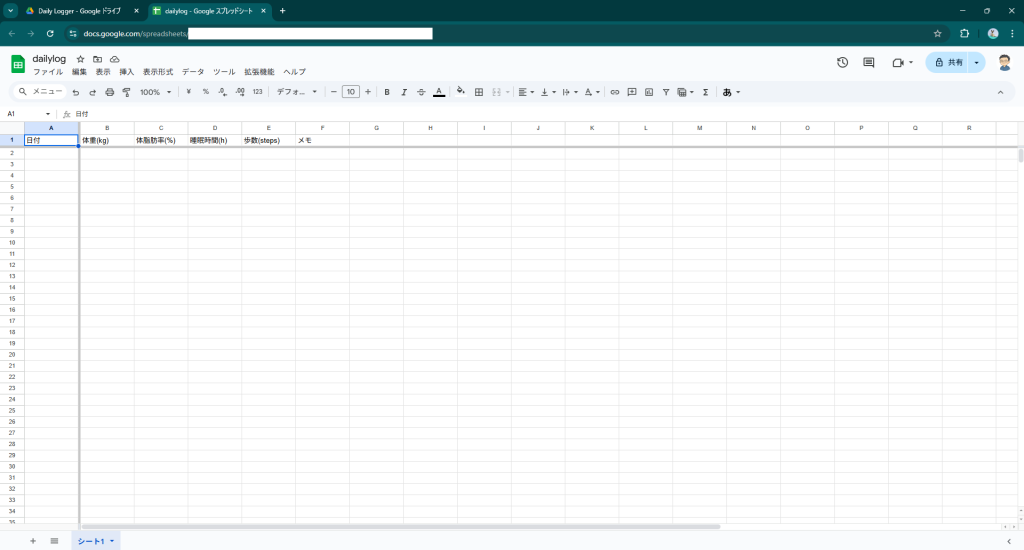
Once the file is created, all that’s left is to keep recording daily.
Establishing a Trainer Role as a Consultation Partner
Managing your health and diet alone can be challenging, especially in terms of maintaining motivation. Therefore, we will establish a trainer role to serve as a consultation partner. I’m currently testing this with ChatGPT, but other generative AI tools or real trainers—such as those at a gym or a doctor—would also be suitable. I plan to consult them once I have gathered more data. Considering detailed consultations, using generative AI to get a feel for the process before consulting a professional expert is also a good approach.
Consult with the trainer on points like the following to build a clearer vision for your future lifestyle.
Set future goals. Example: Lose 10kg in one year, achieve a BMI below 15, etc.
Discuss how to proceed with your future lifestyle. Example: Sleep, exercise, dietary improvements, etc.
Start tracking: Record data for one week, then consult the trainer weekly.
For instance, weight can fluctuate by about ±0.8kg daily due to timing of measurement and body water levels. Focusing too much on daily changes can lead to worry when there’s a slight increase. I think it’s better to record data calmly and review it weekly.
Once enough data is accumulated, I’ll visualize it with graphs to assess progress.
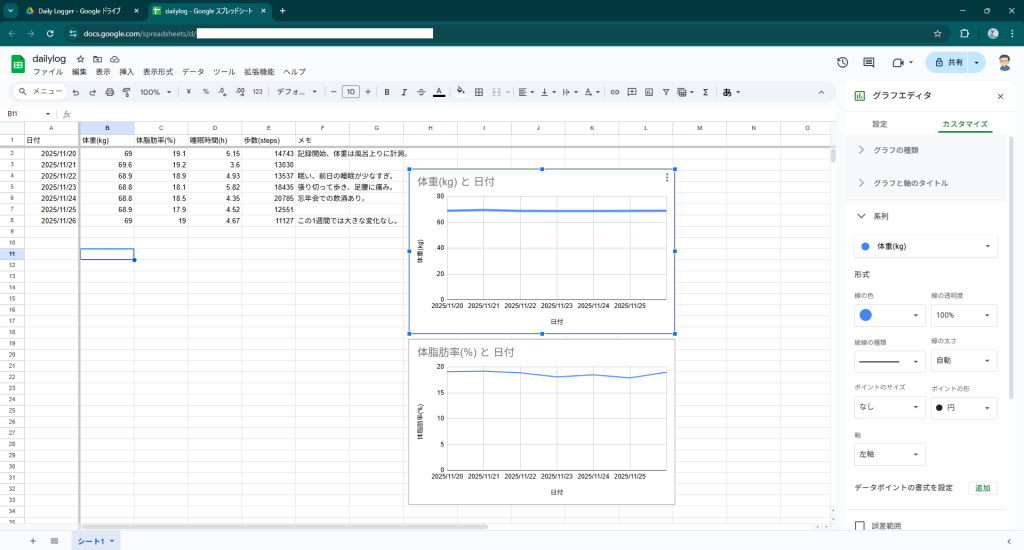
例えば、1週間記録を続けた例です。この週は始めたばかりで大きな変更はありませんでした。
The trainer will provide this data in Excel or CSV format and discuss the next steps.
Example: When discussing this week’s progress toward the goal of losing 10kg in about a year, we roughly reached the following conclusions:
- It’s too early to draw conclusions after just a week or so; we should continue.
- Since sleep is insufficient, increase sleep time by at least 30 minutes per day.
- Walking too much isn’t ideal either, so around 8,000 steps per day is sufficient.
Incorporate vegetables into meals. Specifically, avoid relying solely on cup noodles and eat salad first. Etc.
While there are various other suggestions regarding exercise, it’s impossible to implement everything simultaneously. Therefore, decide what to focus on for the following week and record it in the above spreadsheet.
I’ll keep at it.
First, I’ll prioritize speed, start by tracking and visualizing my progress, and set up someone to consult with.
I’ll review this weekly while considering improvements to the tools and how I operate.
Since pushing too hard can become burdensome and make it hard to keep going, feel free to consult your trainer about the operational aspects as well.
